Self-Care for Caregivers: How to Refill When Everyone Needs You
If you are the one who remembers the medications, drives to the appointments, answers the midnight calls and still shows up to your own life — this is for you. Caregiving is love in its most practical form, and it is also, statistically, one of the heaviest health loads a woman can carry. Self-care here is not spa music and guilt. It is maintenance for the person holding everything up.

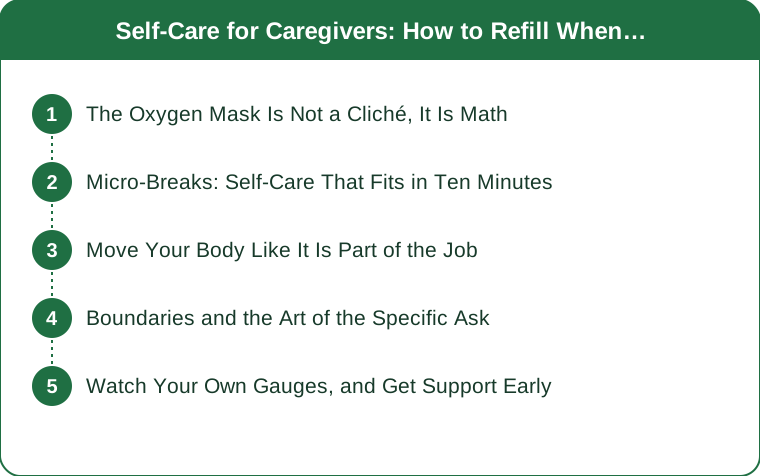
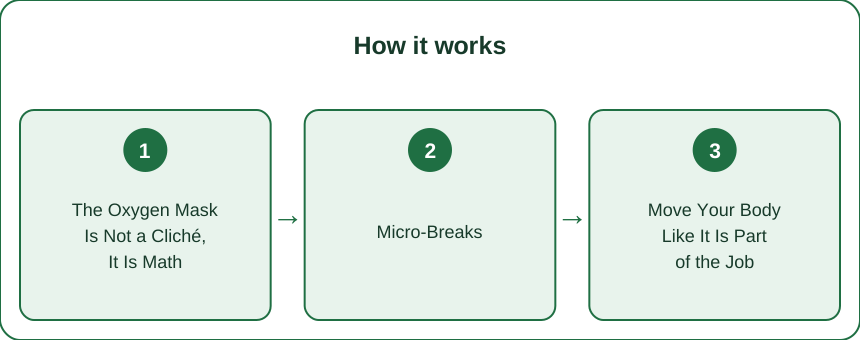
The Oxygen Mask Is Not a Cliché, It Is Math
Caregivers — most of whom are women — show measurably higher rates of exhaustion, depression and even illness than non-caregivers. Not because they are weak, but because chronic output without input breaks any system. Every hour you invest in your own sleep, meals and movement is not stolen from your person; it is what keeps their caregiver functional. Run the math like a nurse would: you are the critical infrastructure.
Micro-Breaks: Self-Care That Fits in Ten Minutes
Forget the weekend retreat you cannot take. Real caregiver self-care lives in the cracks: tea by the window while they nap, ten slow breaths in the parked car, a podcast on the pharmacy run, stretching your shoulders while the kettle boils. Attach tiny restorative rituals to things you already do daily. Ten minutes, six times a day, outperforms the big break that never actually happens.

Move Your Body Like It Is Part of the Job
Caregiving is physical — lifting, bending, hours on your feet — and a stronger body simply does it more safely. A short daily walk, basic squats and some back-friendly stretching are occupational equipment, not vanity. Comfortable supportive clothes you can move in all day count too. Think of exercise as training for the role you are already performing, because it is.
Boundaries and the Art of the Specific Ask
The sentence that saves caregivers is not I am fine. It is: Can you take Tuesday? People genuinely want to help but freeze at vagueness, so keep a ready list of specific, delegable tasks — a grocery run, one appointment drive, sitting with mom Thursday afternoon. Saying yes to help is not failing at devotion. It is staffing the operation properly, and every good operation has more than one person on it.
Watch Your Own Gauges, and Get Support Early
Burnout creeps in disguised as normal tiredness. Warning lights: dreading days you used to manage, snapping at the person you care for, sleep that never refreshes, going numb. Those are signals to add support — a caregiver group, a counselor, respite care, your own doctor — not to push harder. Asking for backup early is what keeps a hard season from becoming a health crisis of your own.
You cannot pour from an empty cup, but you also do not need a full one — you need a cup that gets topped up daily, in small honest ways. Guard your micro-breaks, make specific asks, move the body doing all this lifting, and treat your own health as part of the care plan. The person you look after needs many things, and a well-supported you is the first one.
Keep Reading
This article is for general informational purposes only and is not medical advice. Always consult a qualified health professional for guidance specific to you.