Respite Without Guilt: The Caregiver's Guide to Actually Taking Breaks
Every caregiver hears ‘take care of yourself too’ — advice that arrives without hours, coverage or permission attached. Respite is the missing infrastructure: the options map from an afternoon to a week, and the guilt-dismantling required to use any of it. (Support resources vary by region — the area agency on aging or care coordinator is the map’s local edition.)

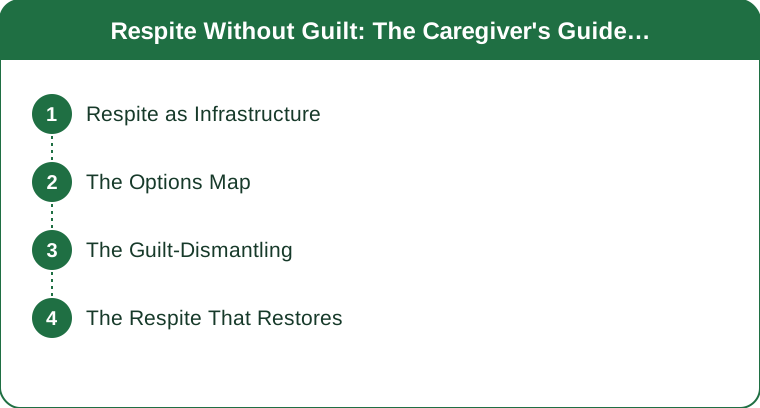
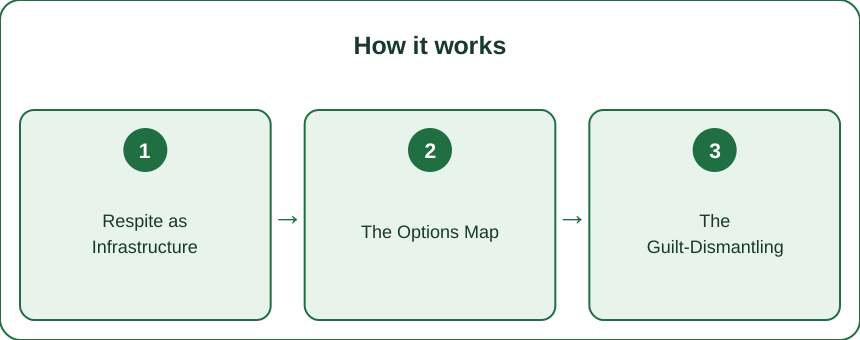
Respite as Infrastructure
The reframe that unlocks it: respite is part of the care plan, not a break FROM it (the caregiver is the care system’s load-bearing wall — walls need maintenance, and the research is stark: caregiver burnout degrades care quality and caregiver health both; the break IS a clinical intervention), the sustainability math (caregiving measured in years cannot run on a schedule designed for weeks — the marathon-not-sprint framing is literal here), and the receiving-end truth (care recipients consistently report preferring a rested caregiver to a guilty, depleted one — the sacrifice arithmetic was always wrong).
The Options Map
The respite menu by dose: the hours tier (family-and-friends shifts — the specific-ask script works better than ‘let me know if you can help’: ‘can you sit with Mom Tuesday 2-5?’ converts vague offers into coverage; the volunteer-companion programs many communities run), the day tier (adult day programs — the structured, social, underused option that serves both parties; the recipient’s day out is the caregiver’s day off), the overnight-to-week tier (respite stays at care facilities — the planned week that makes the year sustainable; booking one is not a trial separation, it’s an oil change), and the funding notes (respite grants, veteran programs and insurance riders exist regionally — the care coordinator’s office knows which apply; the money question has more answers than most caregivers hear about).

The Guilt-Dismantling
The head-work that makes respite usable: the guilt is predictable, not informative (it arrives on schedule with every break — its presence signals conscientiousness, not wrongdoing; feeling guilty and doing the respite anyway is the skill), the quality-not-abandonment evidence (professional respite providers are trained, vetted and experienced — the care continues; it’s the caregiver that changes for an afternoon), the start-small ladder (the two-hour break before the two-day one — guilt shrinks with exposure like every anxiety; the first respite is the hardest and the most important), and the oxygen-mask cliché’s honest core (it persists because it’s true — the depleted caregiver eventually becomes the second patient; respite is prevention).
The Respite That Restores
Using the hours well: the actual-rest audit (the respite afternoon spent on errands is logistics, not restoration — some breaks must be FOR you: the walk, the nap, the friend lunch, the movie; the energy-audit distinction between fake rest and real rest applies double here), the connection dose (isolation is caregiving’s shadow tax — the respite that includes people repays twice), the movement slot (the walking-group hour or the gym class — the body carrying the care needs its own maintenance), and the no-justification rule (the respite hours require no productivity report — rest that must be earned isn’t rest). The break was never a luxury line-item; it’s the maintenance schedule of the care system’s most important machine.
Respite is the care plan, ask specifically, start with two hours, rest without receipts. The caregiver is infrastructure — and infrastructure gets maintained on purpose.
Keep Reading
This article is for general informational purposes only and is not medical advice. Always consult a qualified health professional for guidance specific to you.