Why Resting Feels Like Neglect When You're a Caregiver (and How to Actually Rest Anyway)
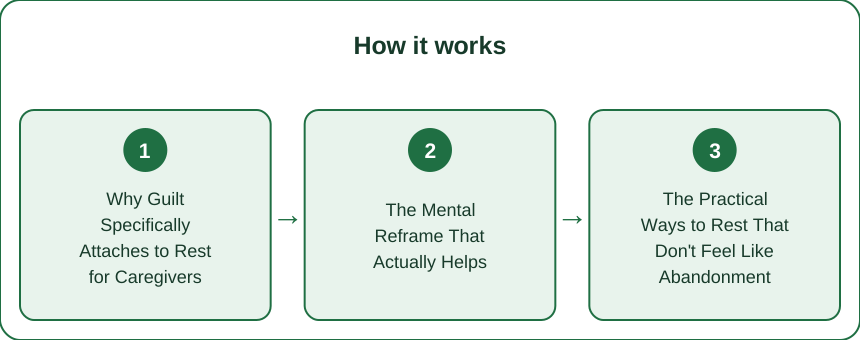
Sitting down to rest for even fifteen minutes can trigger a specific kind of guilt in caregivers that doesn’t show up the same way for most other forms of tiredness — a nagging sense that resting means something or someone is being neglected in that moment. It’s an understandable response, but not an accurate one, and it’s worth examining directly. Here is why guilt specifically attaches to rest for caregivers, the mental reframe that actually helps, and the practical ways to rest that don’t feel like abandonment.

Why Guilt Specifically Attaches to Rest for Caregivers
The psychological mechanism: the the-identity-fusion-with-constant-availability (the caregiver identity often becoming fused with the idea of constant, uninterrupted availability, making any pause feel like an identity violation rather than a normal human need — the resting-can-feel-like-a-betrayal-of-the-role-itself), the the-visible-suffering-creates-urgency-bias (the witnessing a loved one’s ongoing needs creating a persistent sense of urgency that makes any non-caregiving moment feel inappropriate — the ongoing-visible-need-distorts-the-sense-of-what’s-actually-urgent-right-now), the the-comparing-your-rest-to-their-suffering (the mentally comparing a moment of your own comfort to their ongoing difficulty, a comparison that almost always produces guilt regardless of whether rest is actually needed — the the-comparison-itself-is-the-source-of-the-guilt-not-the-rest), the the-societal-narratives-around-selfless-caregiving (the cultural framing of ‘good’ caregiving as boundless self-sacrifice reinforcing the idea that needing rest reflects insufficient devotion — the the-narrative-around-selflessness-sets-an-impossible-standard), the the-past-moments-of-guilt-create-an-anticipatory-loop (the previous instances of feeling guilty about resting creating an anticipatory dread that shows up before rest even begins, from the caregiver-self-care-guide logic — the anticipating-the-guilt-can-become-its-own-cycle), and the reframe (the guilt as an understandable but inaccurate signal produced by identity fusion, urgency bias and cultural narratives — not an accurate measure of whether rest is actually harmful to the person you’re caring for)).

The Mental Reframe That Actually Helps
The shift in thinking: the the-rest-is-maintenance-not-abandonment (the reframing rest specifically as maintenance of the caregiving capacity itself, rather than a pause from it — the rest-sustains-the-caregiving-it-doesn’t-interrupt-it), the the-sustainable-care-requires-a-sustainable-caregiver (the recognizing that depleted caregiving quality over the long term causes more harm than a short daily rest period ever could — the the-long-view-favors-rest-not-constant-presence), the the-your-presence-isnt-actually-continuous-anyway (the acknowledging that caregiving already involves natural gaps — sleep, other tasks — meaning rest isn’t introducing a new category of absence, just a planned one — the planned-rest-isn’t-fundamentally-different-from-the-gaps-that-already-exist), the the-guilt-is-a-feeling-not-a-fact (the treating the guilt as information about a deeply held belief, not as evidence that something wrong is actually happening — the feeling-guilty-and-doing-something-wrong-are-not-the-same-thing), the the-modeling-rest-benefits-those-you-care-for-too (the demonstrating sustainable self-care sometimes directly benefiting the person receiving care, particularly if they are aware of and concerned about your wellbeing — the your-rest-can-be-good-for-them-too-not-just-you), and the frame (the mental reframe as rest-as-maintenance, sustainability over constant presence, recognizing that gaps already exist, separating feeling from fact, and understanding that your rest can benefit the person you care for too — a genuinely different lens on the same fifteen minutes).
The Practical Ways to Rest That Don’t Feel Like Abandonment
What actually helps in practice: the arrange-specific-coverage-before-resting (the having a specific person or plan in place during rest periods reducing the anxious sense of leaving something unattended — the specific-coverage-reduces-the-anxious-uncertainty), the the-start-with-very-short-rest-periods (the beginning with five or ten minutes rather than attempting a longer break that feels too big a leap from the current pattern — the short-periods-are-easier-to-tolerate-and-build-from), the the-use-respite-care-resources-if-available (the formal respite care services providing structured, guilt-reducing coverage specifically designed for this exact need from the caregiver-respite-guide logic — the formal-respite-removes-some-of-the-improvisational-anxiety), the the-rest-in-the-same-space-if-full-separation-feels-too-hard-at-first (the resting nearby rather than fully away, as an intermediate step for building tolerance for rest at all — the nearby-rest-is-a-reasonable-first-step-not-a-failure-to-fully-detach), the the-notice-and-name-the-guilt-without-obeying-it (the acknowledging the guilty feeling as it arises without automatically getting up and abandoning the rest period because of it — the noticing-the-feeling-without-acting-on-it-is-the-actual-skill-being-built), and the frame (the practical approach as arranging specific coverage, starting small, using respite resources where available, allowing nearby rest as a first step, and noticing guilt without obeying it — building the actual capacity to rest, one short, imperfect period at a time).
Caregiver guilt attaches specifically to rest because the caregiver identity often fuses with the idea of constant availability, witnessing ongoing need creates a persistent sense of urgency, and cultural narratives frame boundless self-sacrifice as what ‘good’ caregiving looks like — none of which makes the guilt an accurate measure of whether rest is actually harmful. The useful reframe is treating rest as maintenance of caregiving capacity rather than a pause from it, recognizing that sustainable care requires a sustainable caregiver, and understanding that natural gaps already exist in any caregiving routine. In practice, arrange specific coverage before resting, start with very short rest periods rather than a big leap, use formal respite care resources where available, allow resting nearby as a reasonable first step if full separation feels too hard, and practice noticing the guilty feeling as it arises without automatically acting on it by ending the rest early.
Keep Reading
This article is for general informational purposes only and is not medical advice. Always consult a qualified health professional for guidance specific to you.