How to Sleep When You Are Listening for Someone All Night
Quick Answer: When you sleep while listening for someone, your brain holds part of itself on watch - keeping sleep shallow and fragmented even when the night is quiet. The fix is not trying harder to sleep deeply; it is making the watch job smaller: a monitor or sensor you genuinely trust doing the listening, a night environment that produces fewer events, shared on-call nights where possible, and strategic napping to repair what the night cannot give.
You got seven hours, technically. You still woke up feeling like you unloaded trucks. Anyone who has cared for a person through the night knows this math does not add up - and the missing variable is that you were never fully off duty, even while asleep.
Why does caregiver sleep feel unrefreshing even at seven hours?
Because hours asleep and depth asleep are different currencies, and listening duty taxes the second one.
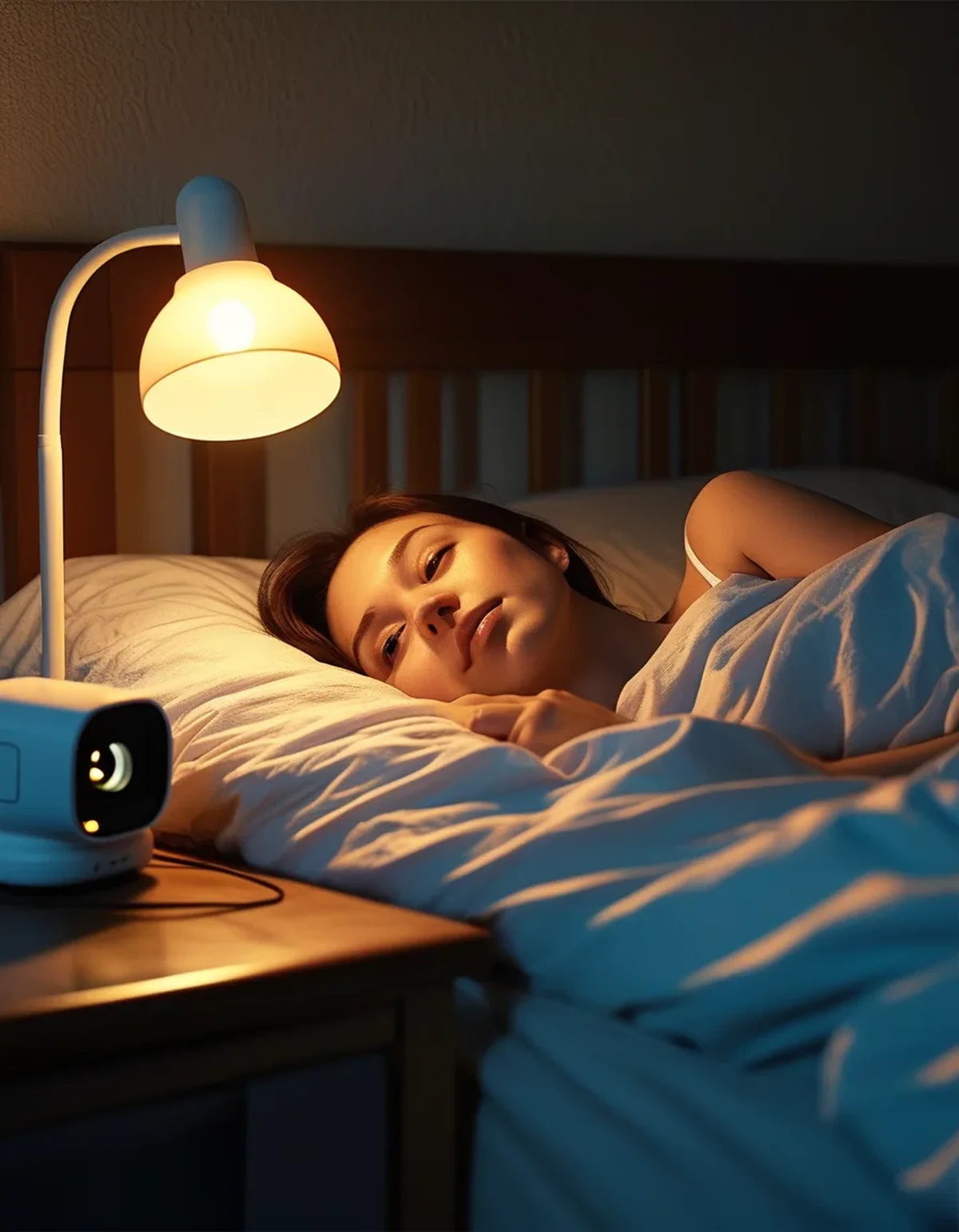
Your brain can stand watch while sleeping - at a cost. Humans have long been able to sleep through meaningless noise yet wake instantly to a meaningful one: new parents do it, and researchers have observed the brain keeping parts of itself more responsive when a person expects to be needed. That vigilance works by holding sleep shallower - more time in light stages, less in the deep slow-wave sleep that does the physical restoration and the memory-clearing.
Quiet nights still cost. This is the cruel part: the tax is charged by the listening, not by the events. Even on a night when the person you care for never stirs, your monitoring brain surfaces repeatedly to check - tiny arousals you do not remember, each one shaving depth off your sleep. Which is why you can be exhausted after a night when, by any log, nothing happened.
Anticipation is its own stimulant. Falling asleep requires your system to stand down, and expecting to be needed keeps a channel of arousal open. Many caregivers describe hovering at the surface of sleep for hours - that is not weakness or worry run wild. It is a nervous system doing exactly the job it was assigned.
The conclusion matters: you cannot willpower your way into deep sleep while also holding the watch. The only real lever is shrinking the watch itself - handing the job to something, or someone, you trust.
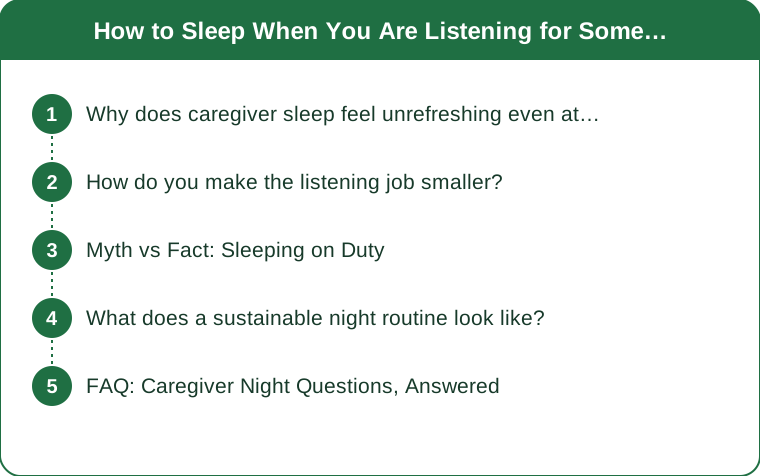
How do you make the listening job smaller?
Your brain relaxes its guard only when it believes the monitoring is covered. That belief is buildable.
Give the job to technology you actually trust. An audio monitor at your bedside - louder and closer than sound traveling down a hallway - means your brain no longer has to strain to hear through walls and doors. Counterintuitively, a good monitor lets many caregivers sleep more deeply with sound available than they slept in silence, because the system trusts it will be woken if needed. For wandering risks, a bed exit sensor or a door chime does the watching your ears cannot. Match the tool to the actual risk: falls, calls, or wandering each have a purpose-built solution, and the test of the right one is that you stop rehearsing the question did I hear something.
Reduce the number of night events at the source. Front-load fluids earlier in the evening to cut 2am bathroom trips, place a commode or clear a lit path to reduce fall risk, use motion-activated night lights, and handle medications on a schedule that does not require a mid-night dose where possible - worth raising with the prescriber if it currently does.
Split the watch if any other adult exists. Alternating on-call nights - even unevenly, even two nights a week - changes everything, because the off-call person can finally sleep without the assignment. Two people half-listening every night get two bad sleeps; one person listening per night gets one bad sleep and one real one. If family cannot cover it, respite care that includes overnight coverage exists in most areas, and using it for sleep is exactly what it is for.
Myth vs Fact: Sleeping on Duty
Myth: A glass of wine helps you get to sleep faster on hard nights. Fact: It shortens the fall-asleep time slightly, then fragments the second half of the night - the exact half a caregiver most needs - and blunts your responsiveness if you are genuinely needed. It is the worst trade on this list.
Myth: Napping will ruin the next night. Fact: For consolidated sleepers, long naps can. For fragmented sleepers, a 20 to 30 minute early-afternoon nap is repair, not sabotage - it repays depth the night could not provide, without touching nighttime pressure much. Set an alarm; the trouble starts past 40 minutes.
Myth: You would sleep through the monitor anyway. Fact: The meaningful-sound effect works in your favor: a parent-style brain reliably wakes to the sound that matters even from deep sleep. A bedside monitor makes the meaningful sound louder and earlier - it raises, not lowers, the odds you respond.
Myth: Needing help with nights means you are failing. Fact: Sentinel sleep is a biological tax, not a character test. No amount of devotion converts shallow sleep into deep sleep - only taking the watch off does.
Myth: A sleeping pill is the simple fix. Fact: Anything that sedates you also sedates the responder the other person depends on, and grogginess plus a 3am transfer is a fall risk for both of you. Sleep medication for a caregiver on active duty needs a doctor who knows the full picture - never a borrowed pill. This is general information, not medical advice.
What does a sustainable night routine look like?
Sustainable is the target - not perfect nights, but a structure that stops the debt from compounding.
Anchor your wake time. A consistent morning anchor, even after a rough night, keeps your body clock organized and protects the following night. Sleeping in three extra hours after a bad night feels earned and quietly makes the next night worse.
Bank a daily nap window. Twenty to thirty minutes, early afternoon, alarm set, same time daily if you can. Treat it as a scheduled shift-change, not a guilty collapse. If daytime coverage makes napping impossible, that fact belongs on the list of things respite hours are for.
Wind down like your sleep depends on it, because it does. A monitoring brain needs extra help standing down: a fixed pre-bed sequence, caffeine cut by early afternoon, screens dimmed, and the monitor set up and checked once - then deliberately not re-checked, because re-checking teaches your brain the equipment cannot be trusted.
Watch your own gauges. Falling asleep at red lights or mid-conversation, microsleeps, driving drifts, a fuse that has gone from long to nothing, dread of the evening - these are not personality changes. They are the signs the debt has reached a level that needs outside help: a family meeting about splitting nights, a respite booking, and a conversation with your own doctor about your sleep and mood. Caregivers put their own appointments last; this is the one to put first, because every hour of care the other person receives flows through the body you are running on empty.
The person you are caring for needs many things from you. All of them are downstream of you getting real sleep some of the time.
FAQ: Caregiver Night Questions, Answered
Why do I wake up exhausted even when nothing happened overnight?
Because the listening itself keeps sleep shallow - your brain surfaces repeatedly to check, even on quiet nights. Hours were logged, but depth was not. Shrinking the monitoring job is what restores depth.
Do baby monitors work for adult caregiving?
Yes, and they are widely used for exactly this - along with purpose-built versions: bed exit sensors for fall and wandering risk, motion alerts, and two-way audio units. The right tool is the one that lets you stop straining to hear through walls.
Should caregivers nap during the day?
If nights are fragmented, yes - 20 to 30 minutes in the early afternoon with an alarm. Short naps repay lost deep sleep without meaningfully disrupting the next night. It is maintenance, not indulgence.
When should a caregiver see a doctor about sleep?
When exhaustion involves microsleeps, near-misses while driving, mood collapse, or dread that colors the whole day - or when sleep stays broken even on covered nights. Bring the caregiving context to the appointment; it changes what safe options look like.
TL;DR:
- Listening duty keeps sleep shallow by design - which is why quiet nights can still leave you wrecked.
- You cannot deepen sleep while holding the watch; you can only make the watch smaller.
- Trustworthy monitors and sensors, fewer night events, and alternating on-call nights are the real levers.
- Anchor your wake time, nap 20 to 30 minutes early afternoon, skip the wine, and treat your own crash warnings as medical, not moral.
The watch is real work, even asleep. Staff it like work - with equipment, shifts, and relief - and sleep starts paying you back.
Keep Reading
This article is for general informational purposes only and is not medical advice. Always consult a qualified health professional for guidance specific to you.