Caring for Kids and Aging Parents at Once: A Realistic Time Framework
Being pulled between a child’s needs and an aging parent’s needs at the same time creates a specific kind of scheduling strain that generic time management advice rarely addresses directly, since the two roles compete for the same limited hours in ways that can’t simply be optimized away.

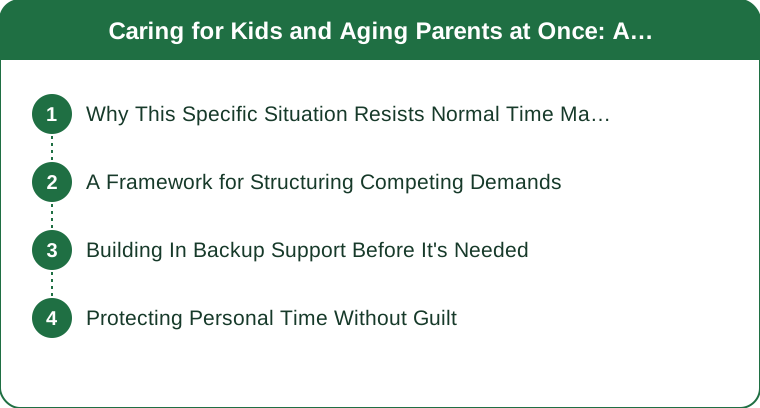
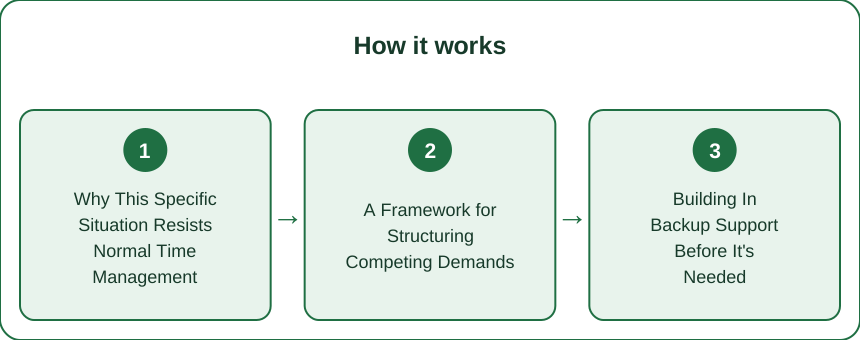
Why This Specific Situation Resists Normal Time Management
The unique strain: the the-both-demands-are-unpredictable (both childcare and eldercare frequently involving unpredictable, urgent needs, like a school call or a parent’s medical situation, rather than tasks that can be reliably scheduled around in advance), the the-emotional-labor-compounds-with-hours (the emotional weight of caregiving for two generations at once compounding in a way that makes the same number of scheduled hours feel considerably more draining than either role would alone), the the-guilt-driven-overcommitment-pattern (a common pattern of saying yes to every request from either generation out of guilt, which gradually erodes any protected time originally set aside for rest or personal needs)).
A Framework for Structuring Competing Demands
The practical structure: the the-designated-non-negotiable-blocks (setting a small number of genuinely non-negotiable time blocks, whether for personal rest or specific family commitments, and treating them with the same protection as an unmovable work meeting), the the-triage-by-urgency-not-request-order (evaluating each incoming request by actual urgency and consequence of delay rather than simply handling whichever request came in first), the the-shared-calendar-across-family-members (maintaining one shared calendar visible to any other involved family members or siblings, reducing the mental load of being the sole person tracking every commitment across both generations).

Building In Backup Support Before It’s Needed
The support system: the the-identify-backup-help-in-advance (identifying at least one backup person or paid service for both childcare and eldercare needs before an emergency requires it, rather than scrambling to find help during an already stressful moment), the the-siblings-or-family-shared-responsibility (having an explicit, ideally documented conversation with siblings or other family members about how eldercare responsibilities are actually being divided, rather than assuming an unspoken default), the the-respite-care-as-planned-not-emergency-only (scheduling respite care or backup support on a regular, planned basis rather than treating it as an emergency-only resource, since regular use prevents burnout more effectively than occasional crisis use).
Protecting Personal Time Without Guilt
The mindset shift: the the-personal-time-is-maintenance-not-luxury (reframing personal time as maintenance necessary to sustain caregiving capacity long-term, rather than a luxury that gets cut first when things get busy), the the-good-enough-standard-across-both-roles (accepting a genuinely good-enough standard in both caregiving roles during an especially demanding stretch, rather than trying to maintain a perfect standard in both simultaneously), the the-professional-support-as-normal-not-last-resort (considering therapy or a caregiver support group as a normal, proactive resource rather than something reserved only for a full crisis point), and the frame (caregiving for both children and an aging parent at once creates a distinct kind of strain that ordinary time management doesn’t fully address — protected non-negotiable blocks, a shared family calendar, backup support arranged before it’s needed, and treating personal time as genuine maintenance are what make the situation sustainable rather than a slow burnout.)
Being pulled between a child’s needs and an aging parent’s needs at the same time creates a distinct kind of scheduling strain, since both roles frequently involve unpredictable, urgent demands rather than tasks that can simply be planned around in advance, and the emotional weight of caregiving for two generations at once makes the same number of scheduled hours feel considerably more draining than either role would alone. A workable structure starts with a small number of genuinely non-negotiable time blocks protected with the same seriousness as an unmovable work meeting, evaluating incoming requests by actual urgency rather than simply the order they arrive in, and keeping one shared calendar visible to any other involved family members so the mental load of tracking every commitment doesn’t fall on one person alone. Identifying backup childcare and eldercare help before an emergency requires it, having an explicit conversation with siblings about how responsibilities are actually being divided rather than assuming an unspoken default, and scheduling respite care on a regular, planned basis rather than treating it as an emergency-only resource all prevent the kind of burnout that occasional crisis-only support doesn’t. Reframing personal time as maintenance necessary to sustain caregiving capacity long-term, rather than a luxury cut first when things get busy, and accepting a genuinely good-enough standard in both roles during an especially demanding stretch, rather than trying to be excellent at both simultaneously, is what keeps the whole arrangement sustainable instead of a slow, guilt-driven burnout.
Keep Reading
This article is for general informational purposes only and is not medical advice. Always consult a qualified health professional for guidance specific to you.