The Caregiver's Back: Body Mechanics for the Lifting Life
Caregiving is a physical job nobody trains you for — the transfers, the repositioning, the daily dozens of small lifts that quietly bill the spine. The body-mechanics guide: the techniques care professionals learn on day one, the home-setup fixes and the strength that backs it all. (An occupational therapist home visit teaches this hands-on — ask the care team; it’s often covered.)

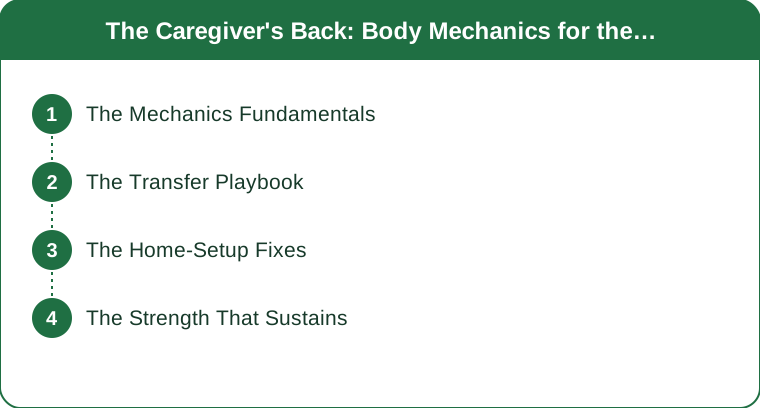
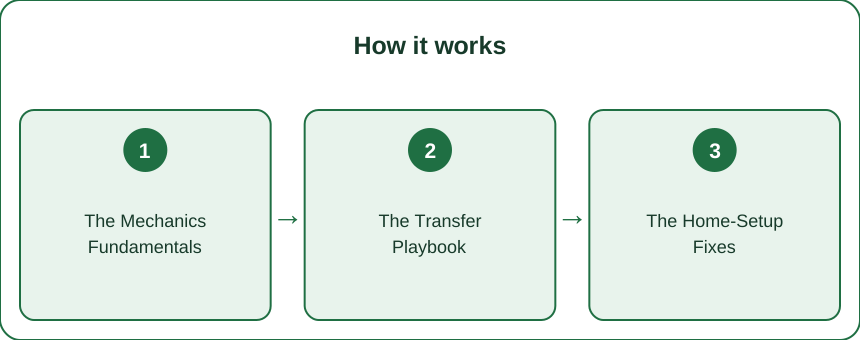
The Mechanics Fundamentals
The professional rules: get close (the load hugged beats the load reached — distance multiplies spinal load faster than weight does; move your feet, not your reach), the hinge-and-legs pattern (the deadlift mechanics — hips back, back neutral, legs drive; the squat-school curriculum was secretly caregiver training), the no-twist law (lifting plus rotating is the injury recipe — feet turn, spines don’t; the pivot-with-steps habit), the brace-and-breathe layer (exhale on the effort — the pressure management from the exercise world applies to every transfer), and the ask-their-help principle (the assisted person contributing even 20% — the count-of-three collaboration — changes the load math entirely).
The Transfer Playbook
The common moves, done safely: the sit-to-stand assist (block their knees with yours, hands at the trunk not the arms, rock-and-rise on three — the arm-pull assist injures both parties), the bed repositioning (the draw-sheet slide beats the direct lift — friction-reducing slide sheets are cheap and spine-saving; raise the bed to work-height where possible), the car transfer (the seat-swivel technique plus the handle-grip setup), and the fall-response protocol (the hardest one: if uninjured, guide them to crawl to sturdy furniture and assist the climb — the dead-lift-from-the-floor heroics are how caregivers join the patient list; and the can’t-get-up situation is what emergency lines are for, without shame).

The Home-Setup Fixes
Equipment as spine insurance: the height audit (beds, chairs and toilets at transfer-friendly heights — risers cost little and subtract daily strain; the low soft sofa is the back’s enemy), the grab-bar-and-pole tier (installed handholds convert lifts into guided assists), the transfer-aid menu (gait belts for controlled assists, slide sheets and boards, and the mechanical-lift conversation for heavier care — the equipment-funding question belongs to the care coordinator), and the clear-the-path habit (transfer zones kept free of rugs and clutter — half of care-lifting injuries involve an obstacle improvisation).
The Strength That Sustains
Training for the job: the caregiver’s gym is the hinge-squat-carry trio (deadlift patterns, sit-to-stand squats and the farmer’s carry — the exact movements the job demands, trained with margin; the twice-weekly minimal-fitness template is the sustainable dose), the grip-and-core supporting cast, the micro-recovery habit (the post-transfer shoulder roll and the evening back-release routine — the day’s load managed daily, not annually), and the pain honesty (persistent back pain is a see-someone signal and a change-the-setup signal — caregivers who push through become care recipients; the sustainable version of this job trains, equips and asks for help by design). The back carries the whole care system — build it margin.
Get close, hinge don’t bend, never twist, train the carry. Caregiving is a physical profession — learn its mechanics, equip its workplace, and strength-train for the role.
Keep Reading
This article is for general informational purposes only and is not medical advice. Always consult a qualified health professional for guidance specific to you.